
The architects of Old Sofia
Adolf Kolar – The creator of the first town planning plan of Old Sofia
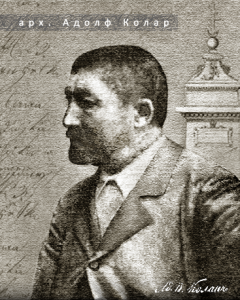 Kolar established his relationship with Bulgaria on the occasion of the Russo-Turkish war. He joined the Russian army and thus entered our lands, still under Ottoman rule, and later, together with Gen. Alabin, arrives in Sofia.
The war has already ended, Sofia has been chosen as the new capital of Bulgaria, and Gen. Alabin is at the head of the provisional Russian government. Thus, in 1878, Adolf Kolar was chosen as the chief architect of Sofia and had the difficult task of transforming its rural appearance into an urban one worthy of the capital of Europe at that time. This is also the beginning of the so-called Old Sofia.
The transformation of Sofia into a European capital
Kolar set about clearing and transforming the muddy winding alleys into beautiful city streets and demolishing some of the many shacks – about 2,000 – in their place beautiful urban buildings are to be built. The way the streets and buildings are built is in the American style – the streets divide the city into squares, in the area of which up to 10 houses with yards can be accommodated. This is the well-known Batenberg urban planning plan of Sofia. In less than 10 years, the European appearance of Sofia is present.
The chief architect did not stop his work even for a moment despite the strong opposition and dissatisfaction he received from the residents.
In collaboration with other architects, he prepared the first partial cadastral map of the center of Sofia, participated in the design of the landscaping of the city, and to him we owe some of the most significant cultural monuments in Sofia – for example: the obelisk monument of Vasil Levski, the City Garden, the Royal Palace , Central Station, Lion and Eagle Bridge, temple-monument “Al. Nevsky”, the house of Prof. Ivan Georgov (14 Shipka St.) – today the house of the Rector of Sofia University has been renovated and is the Crystal Palace Hotel, the house of Georgi Georgov (13 Dondukov Blvd.) – the brother of Ivan Georgov, grand hotel “Bulgaria” and many others.
Nikola Lazarov – The master of secession
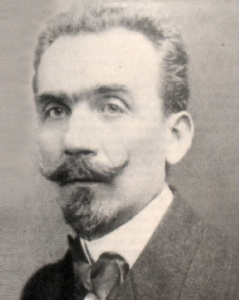
Nikola Lazarov was born in Karlovo, but his buildings decorate cities all over Bulgaria. He graduated in architecture in Paris, after which he began his career in the Principality of Bulgaria as an architect for the maintenance of government buildings. Later he opened his own private architectural office in Sofia.
Architect Lazarov remains in history as a master of Secession. However, apart from the French Secession, in its buildings we can find touches of the French Baroque, as well as the touches of the French architect Hector Guimard.
Together with Herman Mayer, Lazarov completed the Evksinograd Palace (Varna), completed the Military Club in Sofia, designed the building of the Bulgarian Central Cooperative Bank in Sofia, the main building of the Vrana Palace near Sofia, the “Small Palace” (House of Petko Bakardjiev) next to the Sea a garden in Varna, the public bath in Pleven, the Military Club in Plovdiv and others.
Many houses of prominent Sofia residents are also his work, among them: Dr. D. Mollov (11 “Narodno Zabranie” square), the Parushevi brothers (159 and 161 “Hristo i Evlogi Georgievi” blvd.), Stefan Vatev (ul. “Kuzman Shapkarev” 1) and others.
Naum Torbov
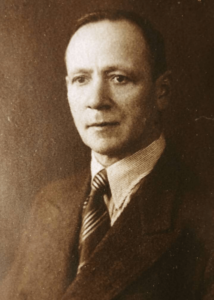
Naum Torbov is a representative of the first generation of architects in post-liberation Bulgaria. It is influenced by Romanticism, Art Nouveau and Art Nouveau. The building of the Central Market Hall is his most significant work. He is also the author of other emblematic buildings for Sofia: the City Casino building (now the Sofia City Art Gallery), the Stanishevi House (now the Chief Mufti’s Office), the Carpenter’s Society building on Hristo Botev Blvd., and many others.
Naum Torbov was born at the end of the 19th century in the village of Gopesh, Bitola, then in the Ottoman Empire, today in North Macedonia. His family immigrated to Bulgaria and settled in the town of Oryahovo, and he was sent to study architecture at the Bucharest Institute of Fine Arts. After graduating in 1904, he returned to Bulgaria and began working in the Ministry of Public Buildings, Roads and Public Works. In 1906, he became the head of the “Architecture” department of the Metropolitan Municipality, and in 1908 he started a private architectural practice. He is a member of the Bulgarian Engineering and Architecture Society. Source: //sofia-hali.bg/
Georgi Fingov – The iconic Bulgarian architect
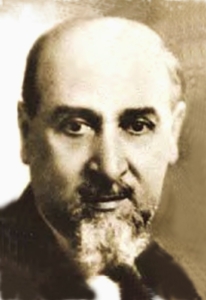
Georgi Fingov is a prominent Bulgarian architect, one of the first to use the Secession style in architecture in our country. He was born in Kalofer in the family of a teacher. He graduated in architecture in Vienna in 1897 and became an assistant to Professor K. Maireder. After returning to Bulgaria, he worked in Plovdiv and then in Sofia. In 1903, he became a founding member of the Society “Contemporary Art”. He often realizes his projects in a collective composition – alongside other prominent Bulgarian architects such as Georgi Apostolov, Dimo Nichev. He made his most remarkable projects, an important part of the charm of Old Sofia, together with Kiro Marichkov.
“The first real secession building in Bulgaria”, as Fingov calls it, was built in 1903 for the merchant Laos Funk. It is located on the corner of “Dondukov” and “Vasil Levski” boulevards and stands out with its shape, ornamentation and secessionist aesthetics.
The Ivanovi brothers’ house at 3 “Angel Kanchev” Street is another project that stuns passers-by – again numerous ornaments, use of forged metal elements and high roofs.
He designed public buildings such as the building of 18 “William Gladstone” Secondary School (the then Third Sofia High School), the Museum of the Ministry of Internal Affairs (Economic School “Maria Luiza”), the buildings of the Sofia Bank (today DSK) at 19 “Moskovska” Street and the Corporate Commercial bank (“Garibaldi” square) and others.
In 1908, he completed his own house, located at 38 Shipka Street. What is interesting about it is that the facade is clean and the emphasis is on an interesting interior. In recent years, a project has been launched to restore and preserve the building due to its deplorable condition.
Georgi Ovcharov – The architect with a distinctive style
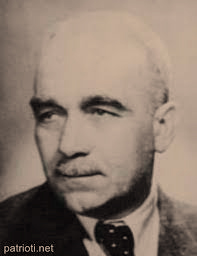
He was born in Silistra, studied architecture in Munich and returned to Bulgaria to work in neoclassicism. The style is an opposition to the abundance of ornaments in Rococo, it relies on scale, simple forms, simplicity of facades and use of colonnades.
Ovcharov built residential buildings – at the request of Tsar Boris III, he designed two in Evksinograd, this was his first major order. His work is the house of the writer Sirak Skitnik on “Borova Gora” street, as well as the cooperative on the corner of “Shesti Septembi” and “Slavyanska” streets, where he lives.
The buildings of the Faculty of Biology, the Ministry of Internal Affairs, the State Musical Theater, the Danube Bridge near Ruse-Giurgevo and others were built according to his designs.
The Mausoleum of Georgi Dimitrov is also his work in a collective with Racho Ribarov and Ivan Danchov. The deadline for the implementation of the project is extremely short, meets with disapproval and needs to be further simplified. The mausoleum was demolished in 1999.
The buildings of Old Sofia are not only functional, but also a symbol of the capital’s image. Maintaining the architectural works of the past and today brings not only joy to the eye, but also peace of mind to people.
He died during the bombings in Sofia in 1944.
Source: https://blog.ocenime.bg/cities/sofia/stara-sofia-architects/